I tried to make a free image model misspell a word. It got all six right
Including ZEPHYRANTHES, a twelve-letter botanical name, on a four-step free model that takes seven seconds. Every image and its seed is published, so you can regenerate them yourself.
Garbled text is the running joke about AI images. Every “best image generator” guide still ranks text rendering as the thing that separates the good models from the rest, usually with a score like 4.93 out of 5.
So I went looking for a failure. I picked words designed to get harder, pinned the seed so anyone can reproduce the exact images, and used a free public Space with no account.
I did not find one.
What I asked for
Every prompt was identical apart from the word:
a plain wooden shop sign hanging on a wall, the sign reads exactly “WORD” in bold black capital letters, centred, sharp focus, no other text anywhere in the image
Model: FLUX.1-schnell, four inference steps, 1024x1024, seed 12345, run through its public Hugging Face Space. Roughly seven seconds per image, no sign-up, no payment.
All six came out right
| Word | Why it should be hard | Result |
|---|---|---|
| OPEN | 4 letters, extremely common | correct |
| RAINBOW | 7 letters, common | correct |
| ESPRESSO | 8 letters, doubled S | correct |
| QUOKKA | 6 letters, rare, doubled K | correct |
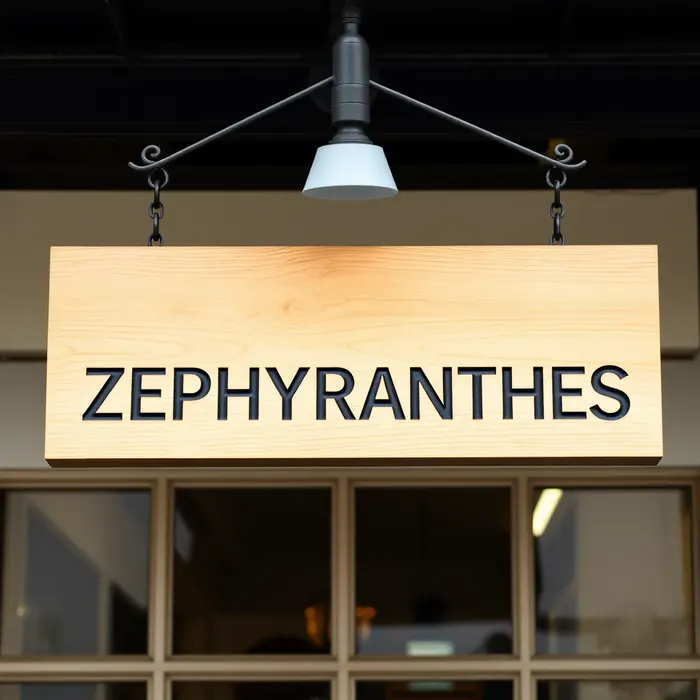
| ZEPHYRANTHES | 12 letters, rare botanical genus | correct |
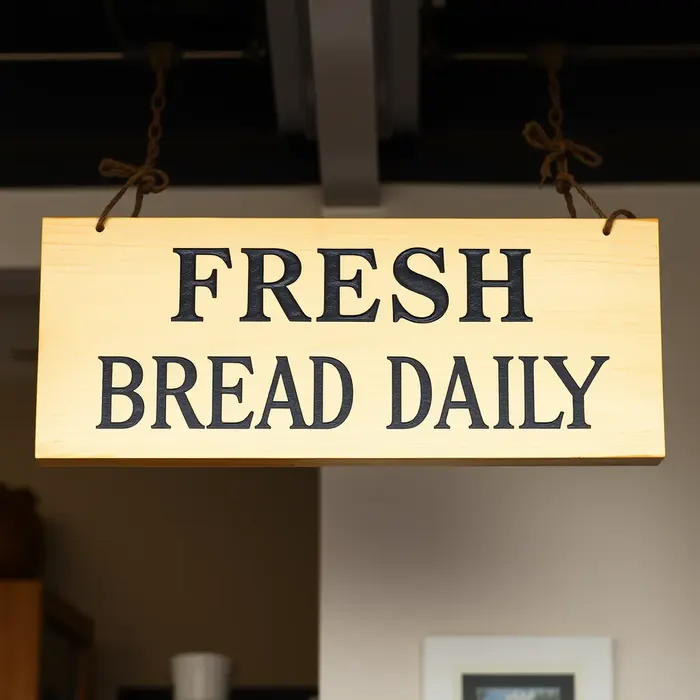
| FRESH BREAD DAILY | three words, two lines | correct |

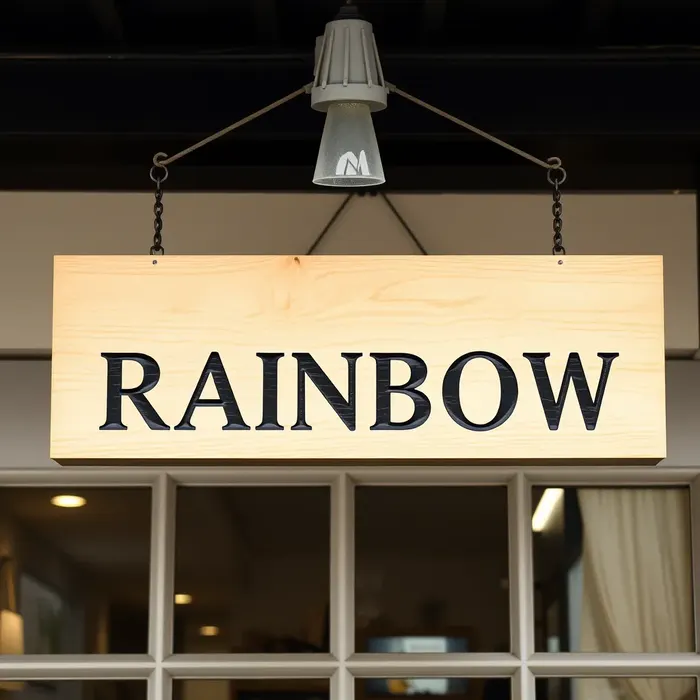
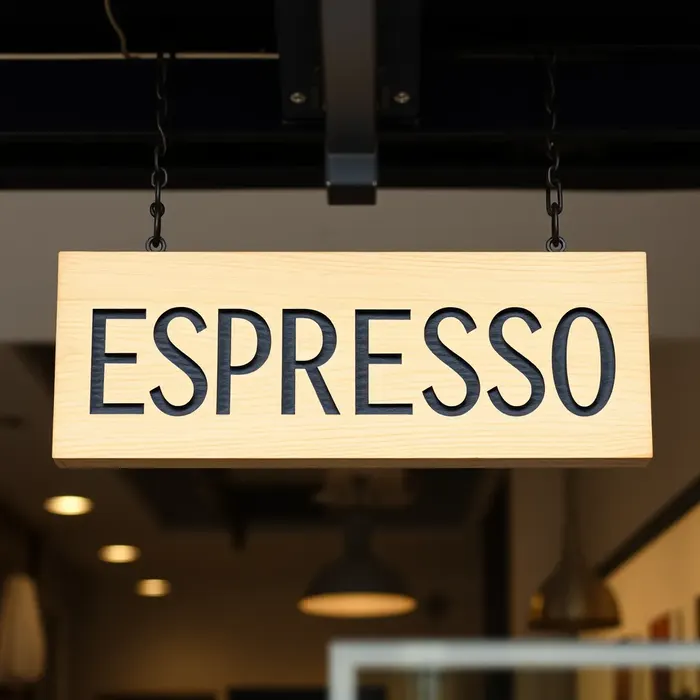
ZEPHYRANTHES is the one I expected to break it. Twelve letters, a genus of rain lily, not a word any model has seen written on many shop signs. It came back letter-perfect.
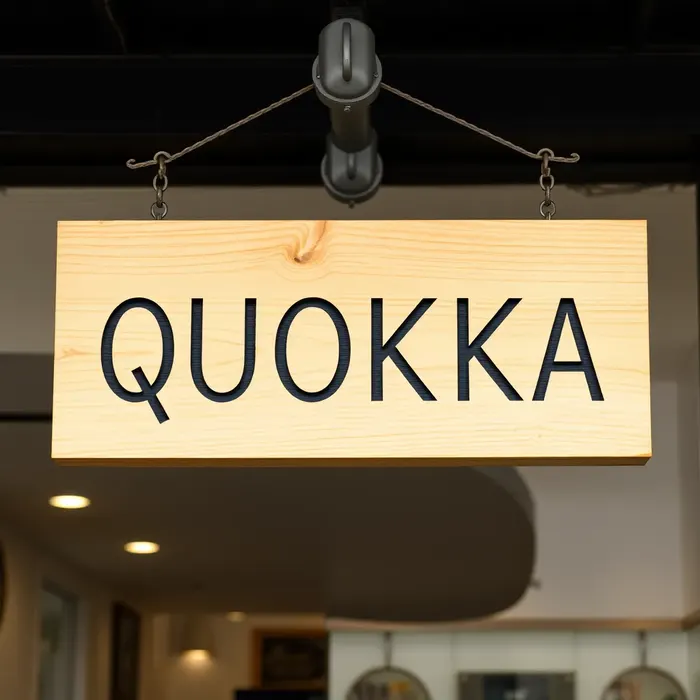
And the three-word phrase laid itself out across two lines, correctly hyphen-free, with no stray extra text anywhere in the frame:
The explanation everyone repeats does not predict this
The standard account is that image models cannot spell because their text encoders use byte-pair encoding: the model receives “RAINBOW” as a token for the concept, never as the letters R-A-I-N-B-O-W.
If that were the whole story, rare words should fail more often than common ones, because rare words are the ones that get chopped into several subword pieces. QUOKKA and ZEPHYRANTHES are exactly that case, and both came out perfect while nothing came out wrong.
So whatever is happening now, “the tokenizer hides the letters” is not sufficient to predict which words a 2026 model can spell. I am not offering a replacement explanation. I measured what came out, not why.
A second model, one word, then the meter ran out
I ran the same OPEN prompt through Stable Diffusion 3.5 Large Turbo’s free Space. Also correct.

Then it stopped: “You have exceeded your free ZeroGPU quota.” One image was all I got. I switched back to plan the harder set for FLUX and hit the same wall a few minutes later.
That is the real constraint on free image generation, and it is worth knowing before you plan an afternoon around it: the models are capable and the compute allowance is small. Neither Space asked for money or an account; they simply stopped.
What this trial does not establish
Six words is six words. This is not an accuracy rate and no percentage should be read into it.
One seed. Every image used seed 12345. A different seed can produce a different result, and I could not test that once the quota was gone.
I never reached the hard cases. The set I had queued when the quota ran out was the interesting one: MISSISSIPPI, ESTABLISHED 1887, an invented word, a full nine-word sentence, and mixed-case text. Long sentences and multiple separate text elements are where I would still expect failures, and I have not tested them. Anyone with quota left can run exactly those against the same seed.
Four inference steps is the fast free setting these Spaces ship with, not a quality-maximising configuration.
The honest headline
I set out to demonstrate a well-known weakness and could not, on a free model, in seven seconds an image, at the first attempt, including on a twelve-letter word I had to look up.
The guides may well be right that text rendering separates models at the top end, on dense layouts and long strings. But the version of this weakness that most people still repeat, that AI cannot spell a word on a sign, did not survive contact with a free model.
Method
FLUX.1-schnell and Stable Diffusion 3.5 Large Turbo, called through their public Hugging Face Spaces with gradio_client, no account, no payment. Fixed seed 12345, randomize_seed off, 1024x1024, four inference steps, identical prompt template throughout. Images are shown as generated, resized for the page and not otherwise edited. Correctness means the rendered characters spell the requested word exactly, judged by looking at each image, which is why every image is published here rather than summarised.